

How To Repair Berber Carpet Seam That Was Pulled Apart
Why exercise so many Russian homes have carpets all over their walls? Russian federation Across takes an in-depth look at one of the well-nigh intriguing Soviet traditions.
Do you know what really hits home with Russians when they watch the brilliant "The Big Lebowski" past the Coen brothers? Information technology's the carpeting, the one "that really tied the room together."
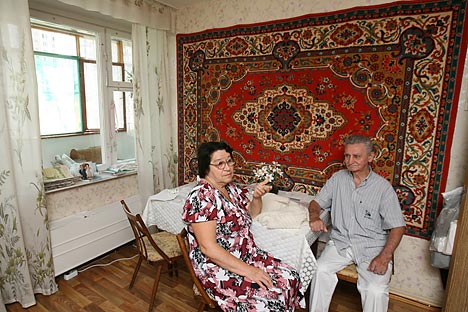
Many of hipsters now instagram their look with a carpet on the wall at the background as a funny 'sometime-school' tradition. Source: PhotoXpress
Although the Dude uses it the proper mode, covering the floor, its design strikingly resembles that of an old carpeting hanging on the wall of a babushka's apartment. But once again, why and what for?
Carpets invaded Russian apartments in the '60s, and the reasons for that were numerous. During the time of massive urbanization, millions of people were leaving their rural houses, dormitories and even barracks, and moving into newly-built metropolis apartments in low-cost, concrete-paneled buildings. These buildings came to be known by the twisted proper name of
The apartments were very cold in winter (

"We didn't care about how information technology looked," said Sergei, a blogger from Siberia. "But when it'due south -40 Fahrenheit outside, and a match lit almost your living room's wall is starting to burn down downwards because of the descending cold air current, it's better to use carpets than to catch
The walls of
And the last, but by no means the to the lowest degree, they are cute in their own way, especially those which were produced in the southern Soviet republics of
Naturally, the Muslim states of the Middle East were the ones that introduced carpets every bit decorations to medieval Europe. In Persia, wall carpets were considered true treasures because of the complexity of their production.
So in
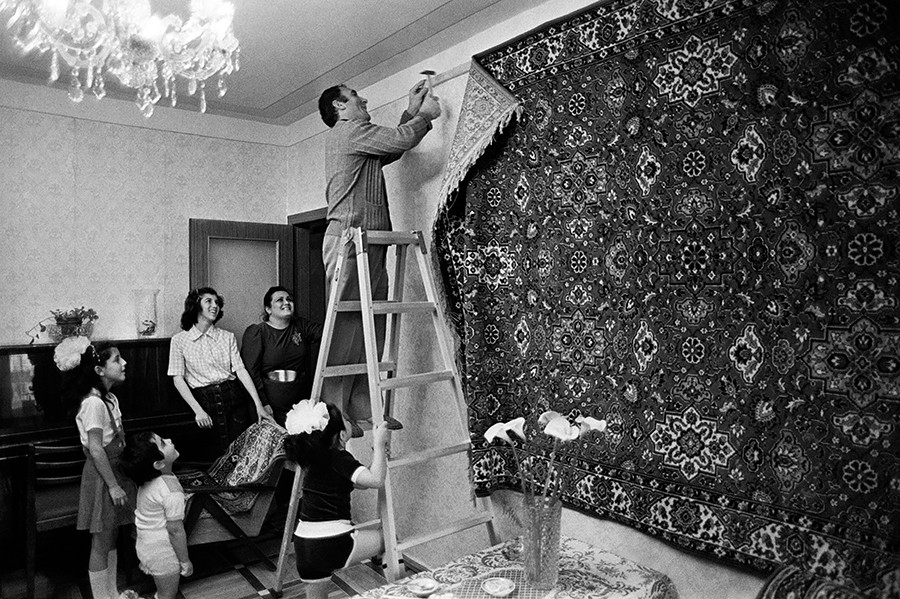
In Soviet times, carpets as well were a sign of a well-to-do family, because information technology could be really expensive. With an boilerplate monthly salary of 120 rubles to 150 rubles, a carpet's cost varied from 125 rubles (in 1961) to 300 rubles to 500 rubles (in the 70s), but that'southward for the carpets made in the Soviet
Just i couldn't just walk in a shop and purchase a carpet – in those times, Soviet citizens had to "procure" (
In the USSR, carpets became an essential item in everyday life. In
The central to both superstitions is the same – both salt and carpets used to be very expensive, and then it's no wonder that spoiling them causes a row. Every bit for the carpets, Russians usually hang them on the walls using small stitched threads.
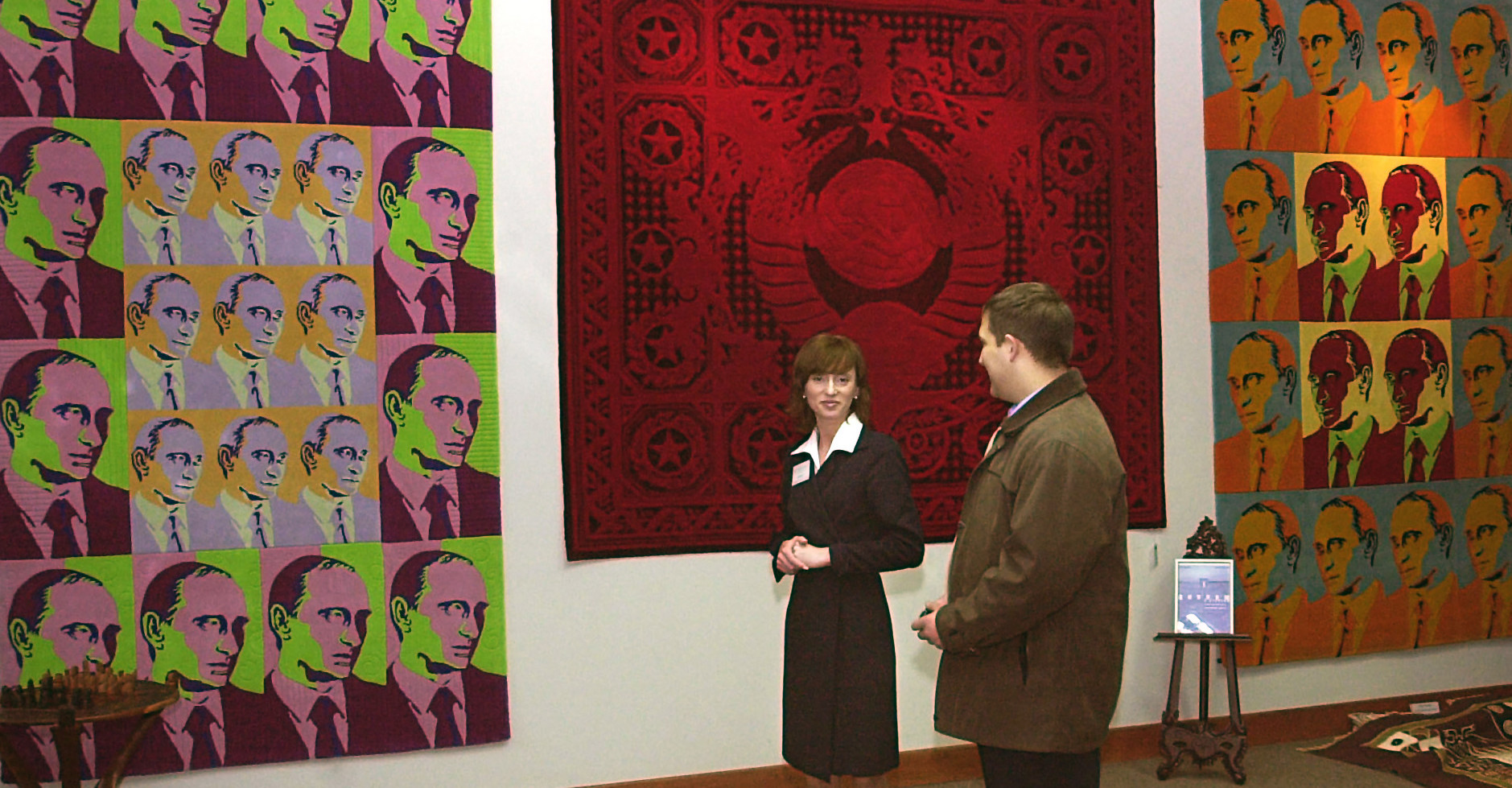
Present, young Russian designers, artists and eccentrics have renovated the trend for wall rug and even devised a humorous title for it: "Its Regal Woolness." So perhaps hanging one in your apartment isn't such a bad idea after all.
All rights reserved by Rossiyskaya Gazeta.
Go the week's all-time stories straight to your inbox

Source: https://www.rbth.com/arts/2014/01/10/behind_the_mystery_of_wall_carpets_32165
Posted by: yatesthfulted.blogspot.com
0 Response to "How To Repair Berber Carpet Seam That Was Pulled Apart"
Post a Comment